Advice for a budding translator December 3, 2009
Posted by Jill (@bonnjill) in Business practices, Translation.3 comments
Hi Ms. Sommer!
My name is [Nicole Kidman], and I just found your website! I’m a freshman at the University of Mary Washington, and I’m planning on majoring in German and…something else. I always thought translating and interpreting were one and the same, but now I realize there is a difference. The reason I wanted to double major is because I had NO idea what career options interested me, and my parents are pressuring me to have a back-up plan because I need to earn money somehow. After reading your website, however, I’ve realized that being a translator doesn’t mean standing behind a diplomat, translating what a speaker is talking about. I have a few questions that I hope you could entertain because I’ve never had the chance to talk to an actual translator before. I studied abroad in Germany last year (took a gap year between high school and college), so I’m pretty steady in my German learning. In high school, I took four years of Spanish (though I’m not passionate about the language), and this year I started Chinese. I definitely plan on continuing with German and Chinese, but I was wondering if you could offer some advice as to which third language I should learn. My parents want me to continue with Spanish. I realize this is the most reasonable choice since 22 countries speak Spanish, but I plan to either work in Europe or with a European country in America. As a translator who has expertise in the German language, which language would be the best accompaniment to German? My options are Spanish, French, Italian, Latin, Greek, and Arabic. Also, since I do want to have a steady career and income, would you say that translation is a steady and growing field?
Sorry, this email has become much more long-winded than I meant it to be! 🙂
Hi Nicole,
I suggest concentrating on learning one language you are passionate about and learning it really well. Live overseas for as long as you can. Being a translator means you need to understand every nuance of the source text (including cultural references and subtleties). Being immersed in the language ensures you understand that the text is talking about a Tornado fighter plane and not an actual tornado. If I were to do it all over again my second major would have been something helpful, like business classes or some technical field that I enjoyed. That would allow you to specialize right out of the gate. It is very rare to find someone who speaks seven languages and knows them well enough to translate them effectively. There are a few people out there that do, but they are very rare indeed. Most agencies prefer to work with someone who translates from one or perhaps two languages into their native language. My friend Jane translates from German and French into English, for example. Dr. Geoff Koby translates from Dutch and German into English, etc. Both work in languages that are somewhat similar. Even though I don’t translate from Russian, I find my knowledge of Russian sometimes comes in handy in WWII documents, for example, when it comes to the transliteration of names or cultural background information.
As for translation being a steady and growing field, absolutely. With globalization the need for translation continues to grow by leaps and bounds. As the current ATA President Nick Hartmann mentioned in the closing ceremony of the ATA conference this year, the industry grew 15% last year and looks like it will grow another 15% this year. There aren’t enough trained translators out there to cover the demand, so I would suggest continuing your undergraduate studies and study abroad one of those years. Then consider studying translation at the graduate level at either Monterey (if you want to interpret, this would be the best choice) or Kent State University.
I hope that answers your questions.
Hey fellow translators, do you have any wisdom to add? If so, please feel free to add some more advice in the comments!
10 simple rules for project managers to live by and keep me happy December 2, 2009
Posted by Jill (@bonnjill) in Business practices.7 comments
1. Tell your client that there will be a rush rate/weekend surcharge of 50% if they want the file back at the end of the day or on Monday morning.
2. Keep in mind that we are not machines. If I just translated 30,000 words for you, please don’t contact me a day later asking for a 2,000 word job due the next day.
3. Don’t question your translator when he/she tells you their word count and it differs drastically. If the difference is 10,000 the translator is most likely right – they know how hard they worked. You don’t. I won’t quibble over anything under one hundred, but anything beyond that…
4. Do not pawn off your work onto the back of your translator. If you get a PDF don’t just guess how many words there are – convert the file to text or run it through an OCR tool and get an accurate word count.
5. Please charge the client more for special formatting requests. Our job is to translate, not to format it from scratch.
6. If at all humanly possible, do not contact your translators at 7 PM during the week or at 5 PM on Friday with a job and ask for quick turnaround.
7. Respond promptly to e-mails and especially to questions your translator may have regarding the text.
8. Honor your translators and proofreaders.
9. Maintain a sense of humor and do not take yourself too seriously. It makes my job – and yours – more enjoyable.
10. Remember that even the Lord rested on the seventh day.
ATA video of the 50th conference November 30, 2009
Posted by Jill (@bonnjill) in ATA, Fun stuff.add a comment
Members of ATA received an e-mail wrap-up of the conference this morning, with links to the photo slideshow, postconference news, and the video below. I think it does a nice job highlighting the benefits of being an ATA member. If you remember, I mentioned that Amanda was wired for sound at our session for First Time Attendees, and she is featured towards the end of the video. If you have a sharp eye you might see me briefly standing there as well, but my “Warning: Translator with an Attitude” bag is featured prominently. Enjoy!
Happy Thanksgiving! November 26, 2009
Posted by Jill (@bonnjill) in Random musings.4 comments
To all of my readers who celebrate Thanksgiving, I hope you’re enjoying some time with friends and family members. I am doing some proofreading this morning, but will be heading to my parents’ house this afternoon for some spinach-artichoke dip and a cheese board (my contribution), turkey, mashed potatoes, gravy, assorted vegetables (whatever my mother makes it will be delicious), salad, cranberry dressing, stuffing and gluten-free pumpkin pie.
Here are a few of the things I’m thankful for this year:
* My family and friends. You make my life rich.
* My health
* My clients, most of whom pay on time (some even early – I love them from the bottom of my heart!) and all of whom contact me with interesting jobs
* The fact that I have a job I enjoy that allows me to work from home (in my slippers) and can support me and my champagne tastes :-).
* The typing class I took in high school, because that skill supported me through graduate school and allows me to translate quickly and accurately.
* The opportunities I’ve had to travel to and live in other countries and expand my horizons
* My blog readers and Twitter followers who simultaneously inspire me and keep me on my toes
* The German Language Division
* My cozy little apartment and the backyard
* The fact that I know where my next meal is coming from
* Having heat coming from the vents and fresh water running through the taps
* My wonderful neighbors. I feel safe knowing you are nearby.
* Meetup.com because I have met some really wonderful friends through Meetup, and it gets me out of the house meeting more people and experiencing all the good food and fun events Cleveland has to offer.
* My dog Lily, who is always thrilled to see me walk through the door and is there for a cuddle when I need one
For a good story of a Thanksgiving spent overseas, I highly recommend clicking here and reading one of my favorite local Cleveland blogger’s tale of her Thanksgiving in Italy. She’s a very powerful writer. I remember preparing a four-course meal (corn and oyster chowder, turkey, spinach linguini with cauliflower, stuffing, mashed potatoes, green bean gremolata, cornbread, salad, apple pie and pumpkin pie) for eight people in my tiny one-bedroom (perhaps 200 square foot?) apartment in Germany one year – in a kitchen that was big enough to allow me just to turn around in. We broke my bed that day too I believe.
What are you most thankful for? Or do you have a story about celebrating Thanksgiving in a different country? I’d love to hear about it!
Trados ad = tempest in a teapot November 25, 2009
Posted by Jill (@bonnjill) in ATA, Business practices, Random musings.23 comments
Tempest in a teapot (in American English) or storm in a teacup (in British English) is an idiom meaning a small event that has been exaggerated out of proportion.
One of my friends forwarded me the following ad last night with the comment “Marian’s making the rest of us look bad. 😉 Would love to know how she pulled that off!” I read the ad, but did not give it much mind. Little did I know it would blow up overnight as I slept.
34,501 words. 10 hours. One translator.
Sound impossible?“I just completed a 34,501 word project in 10 hours thanks to AutoSuggest, Context Match and the other nifty time-saving features within SDL Trados Studio 2009 SP1. That’s without having much of anything in the pre-existing TM!”
Marian Greenfield, Translator and Trainer
I tweeted that I wondered how she managed to pull it off and went to bed. I woke up this morning to find that the ad has generated a lively discussion on Twitter and on ProZ.com.
I know Marian personally and know that she is an extremely capable and talented translator. She is also very generous with her time and advice, presenting on growing your business and earning a six-figure salary at recent ATA conferences. I never doubted for a minute that she achieved this feat and was proud of her accomplishment, as I’m sure she was. Trados cites her as being a translator and trainer, but everyone in the industry knows that she is also a former ATA President (and did a fine job).
One comment in the ProZ.com discussion really gave me pause. The author took offense that an ATA executive or former ATA president was using their clout to advertise for a translation environment tool. I can understand taking pause and wondering if she was compensated. However, Paul Filkin, the SDL Trados representative, responded to this by saying “It is comments like this that I find extremely insulting and completely unwarranted. I can assure you that this translator received no compensation whatsoever for providing this quote.” It seems as if people are making assumptions and jumping to conclusions without talking to those involved.
I don’t know about you all, but I have better things to do with my day today than get all up in arms about a person who volunteered several years of their time to serve on the ATA Board and travel extensively for two years as President of ATA – for no compensation whatsoever.
Everyone talks about the ATA Board as if it is “us against them.” That isn’t the case. Everyone on the ATA Board is just like you and me – and no one gets compensated for taking time out of their undoubtedly busy days to respond to a tempest in a teapot like this one or just to make decisions for the good of the members. ATA Board members are all volunteers and could be you in a few years!
Sure, it was tacky of SDL Trados to advertise using a claim that most translators could never dream of achieving. There isn’t a whole lot of repetition in most of the texts I translate (but I do enjoy it when there is!). Marian, on the other hand, translates financial documents, and the file in question was an Excel file with lots of repetition throughout the text. However, we translators should investigate more instead of getting all hot under the collar and jumping on the outrage bandwagon. I for one am glad I found the ProZ.com discussion and read Paul’s explanations. Everyone should just simmer down and enjoy the long holiday weekend!
Blogger lunch at the 50th ATA Conference November 18, 2009
Posted by Jill (@bonnjill) in ATA, Random musings, Translation Sites.3 comments
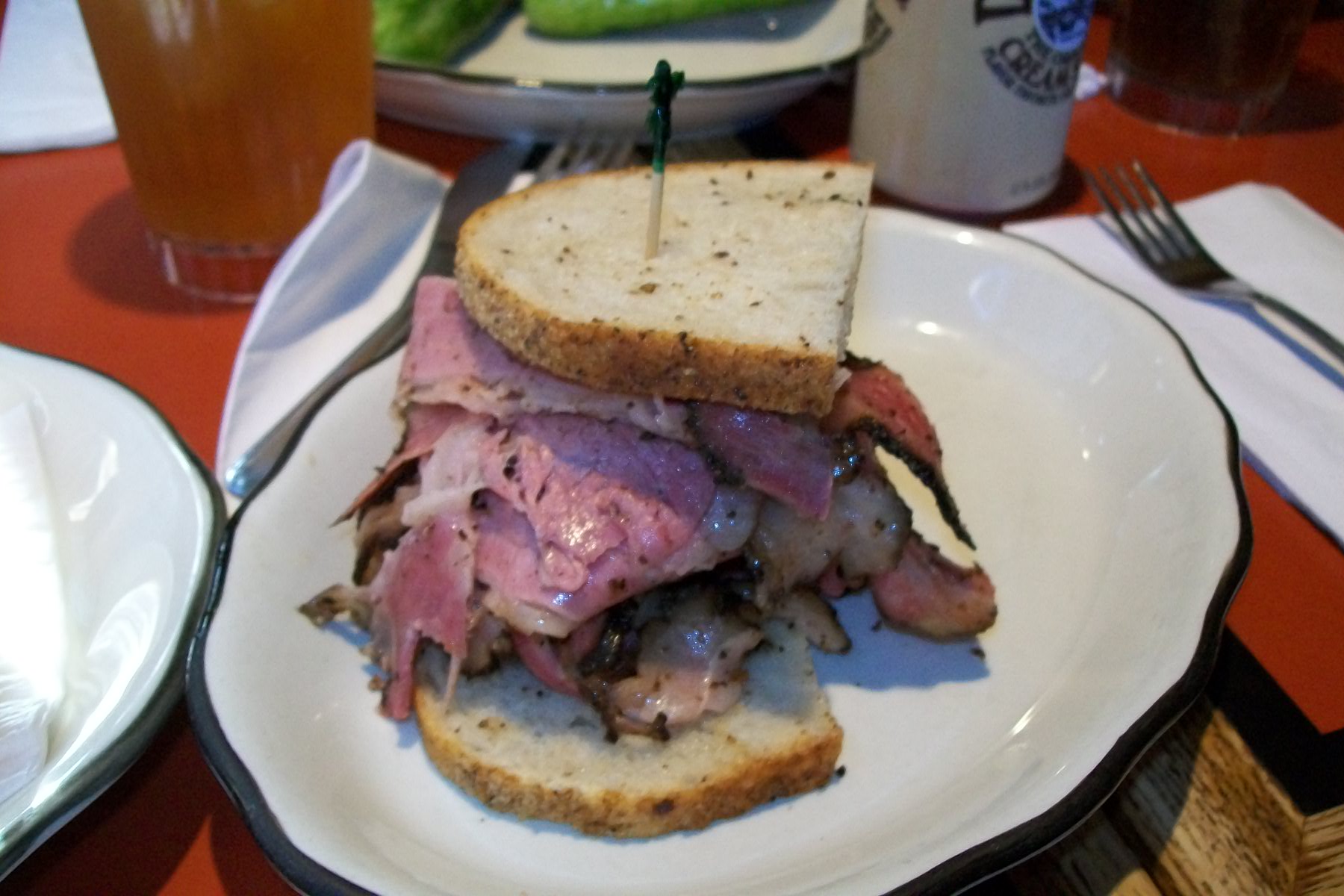
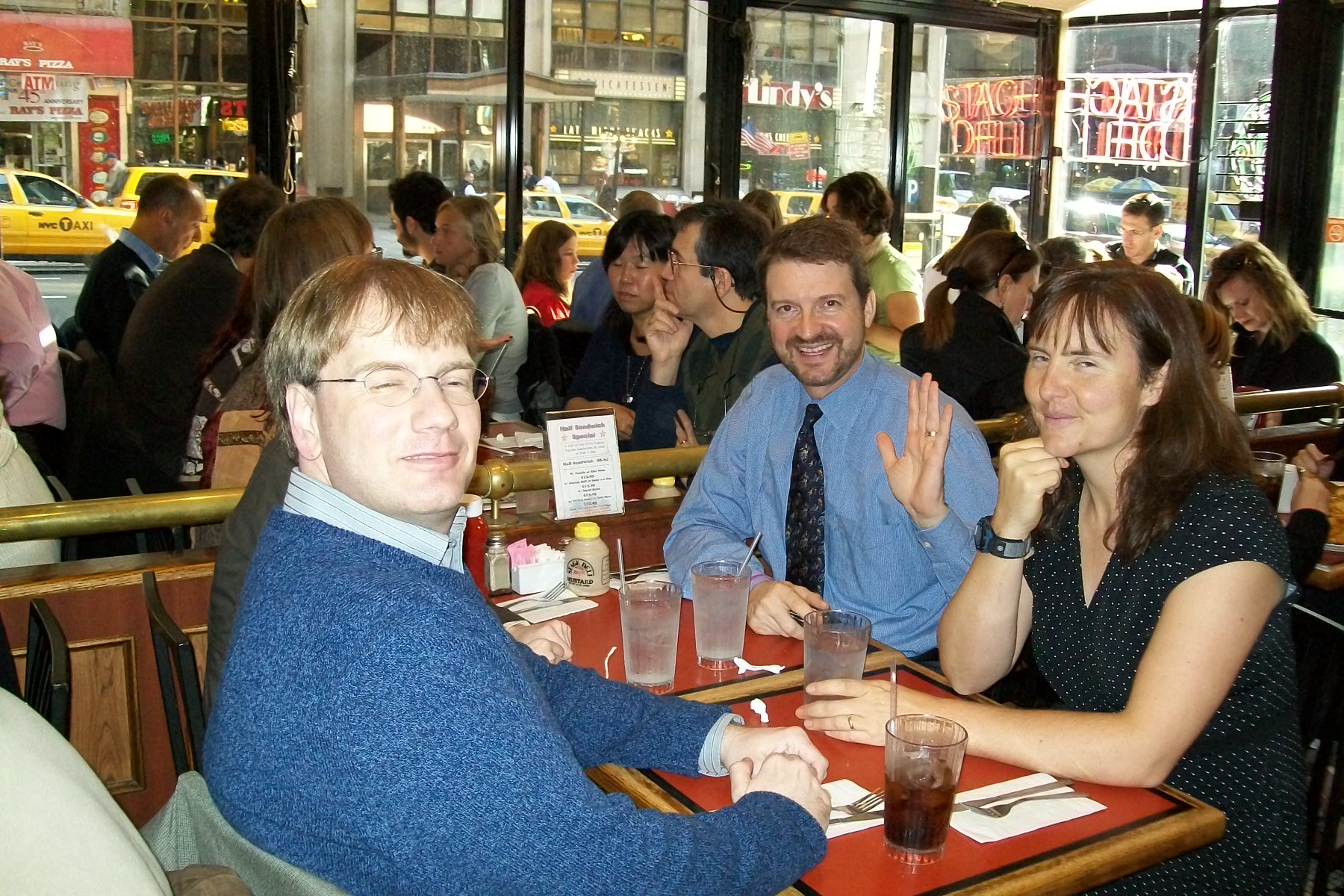 We had a really good turnout for our second annual blogger lunch, which offered bloggers and readers a chance to sit down and get to know each other during lunch on the first day. This year it was a little difficult to get everyone together, because I was unfamiliar with the layout of the hotel. Luckily I had specified the restaurant, The Stage Deli, ahead of time, so four readers were already there when we got there.
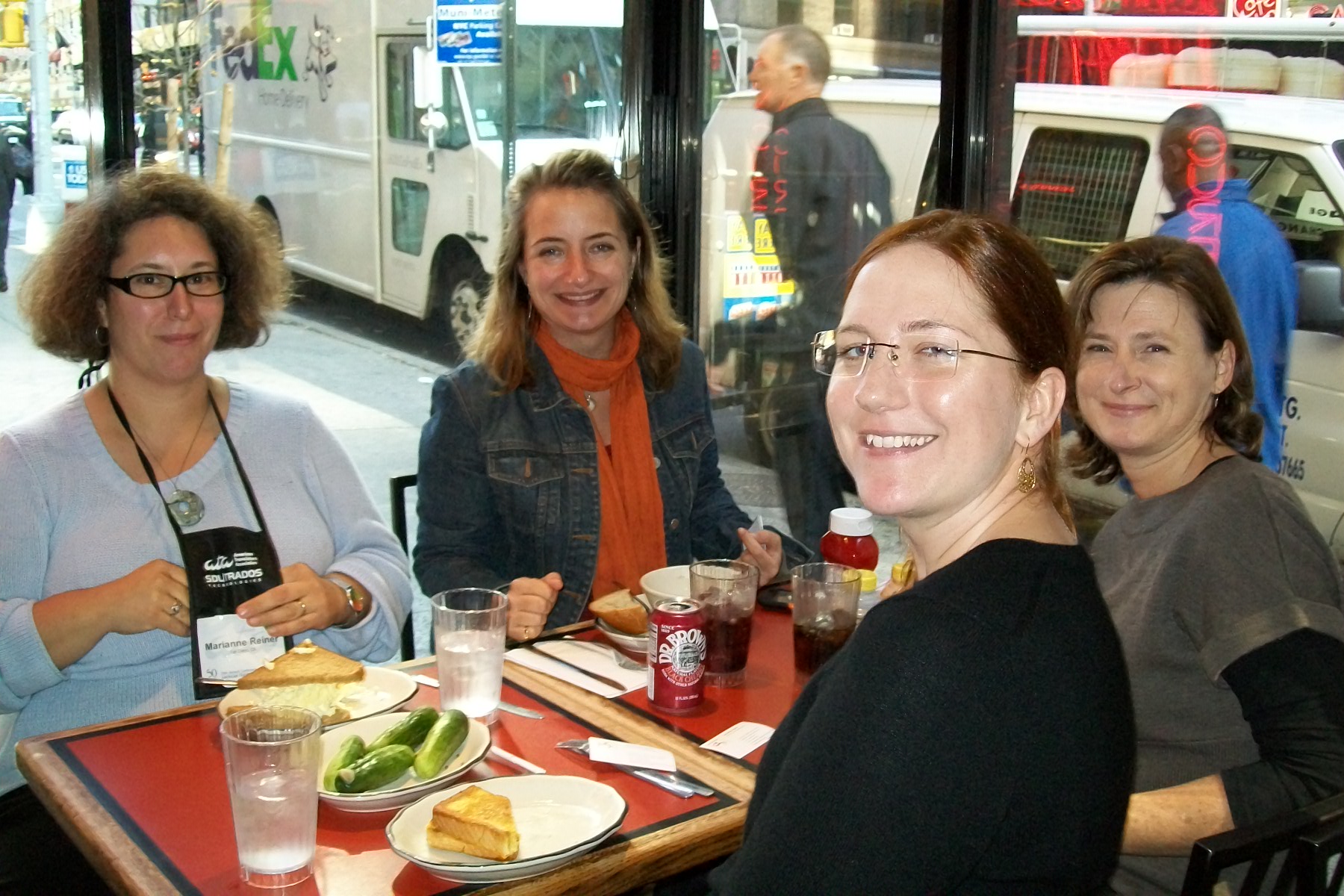 We had a total of 18 people attend our blogger lunch. Corinne McKay of Thoughts on Translation, Judy Jenner of Translation Times, Riccardo Schiaffino from About Translation, Tom Ellett of The Wor(l)d-Weary Translator, and Eve Lindemuth Bodeux of the Speaking of Translation podcast represented the bloggers. We had quite a few readers join us as well. I am not able to list you all, but I am so glad you all could join us. Unfortunately we weren’t able to all sit together, but I hope everyone enjoyed talking to those at their table.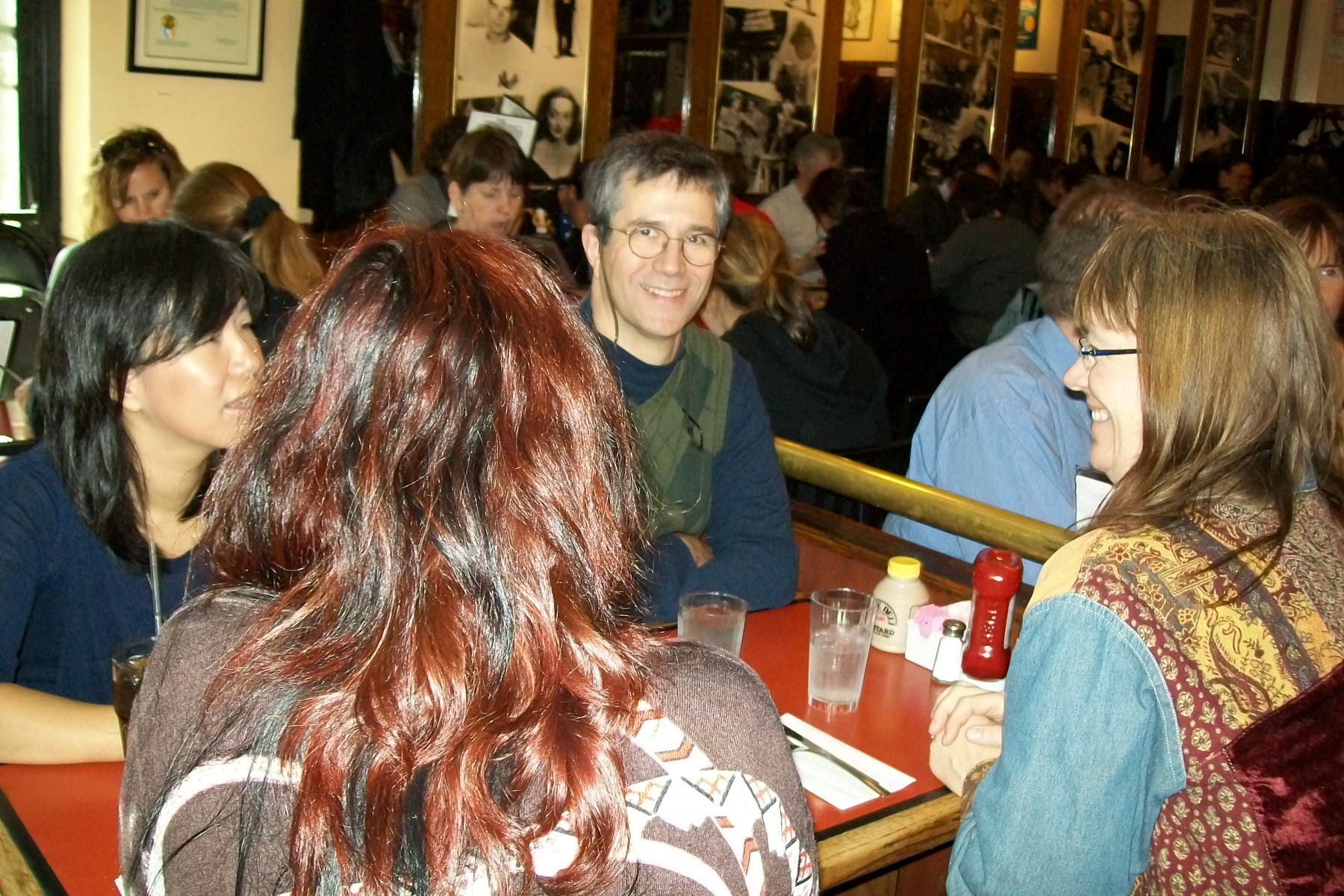
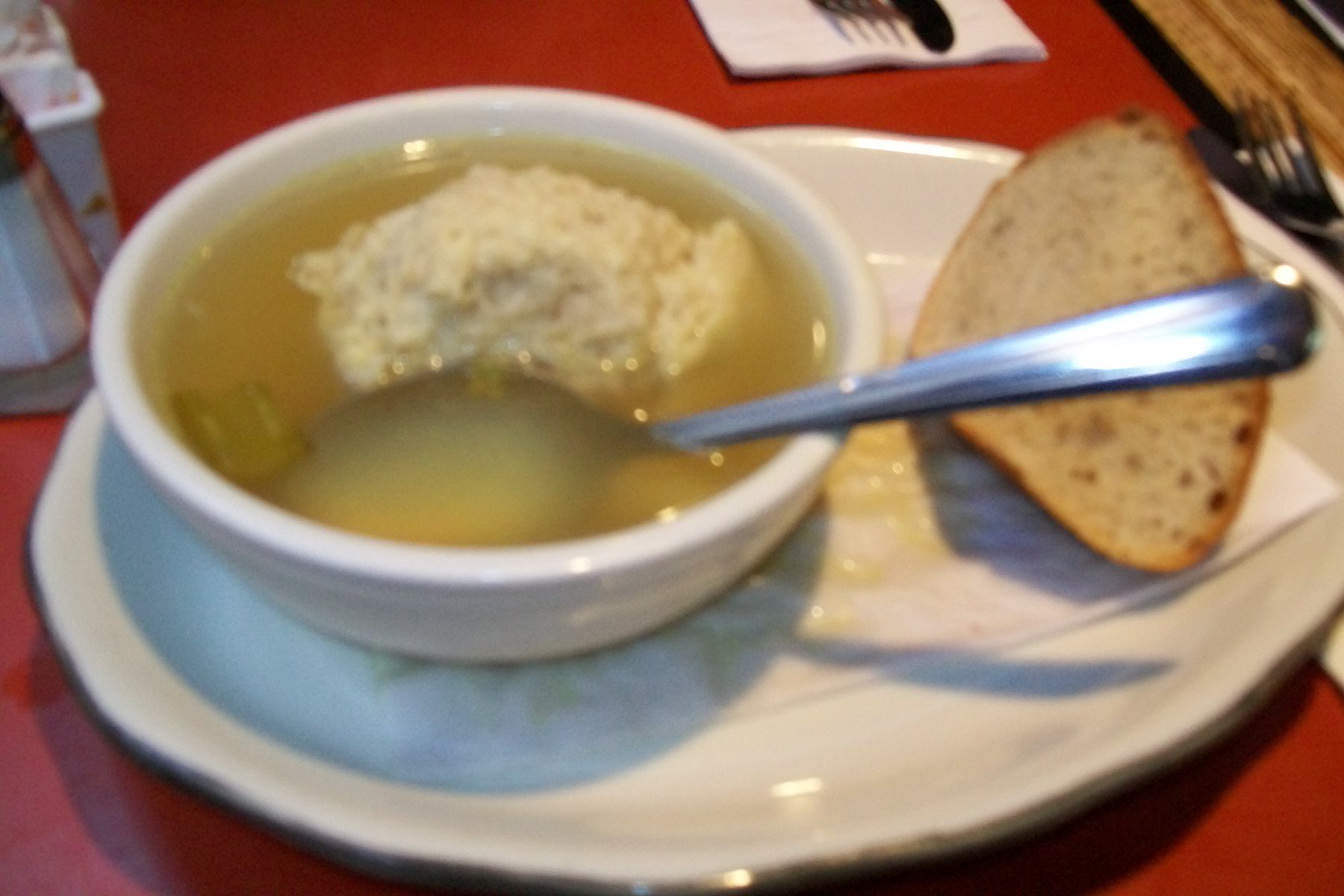
The food was good. I had really looked forward to trying one of their famous monster sandwiches and taking the second half back to the hotel for later, but since the hotel didn’t offer a refrigerator in the room that wasn’t an option. I decided to order a bowl of matzoh ball soup and a half a corned beef sandwich instead, which was just right. We also really enjoyed the kosher dill pickles they served. I hope you all enjoyed yourselves as much as I did.
Report from the 50th ATA conference November 17, 2009
Posted by Jill (@bonnjill) in ATA, Random musings, Translation.10 comments
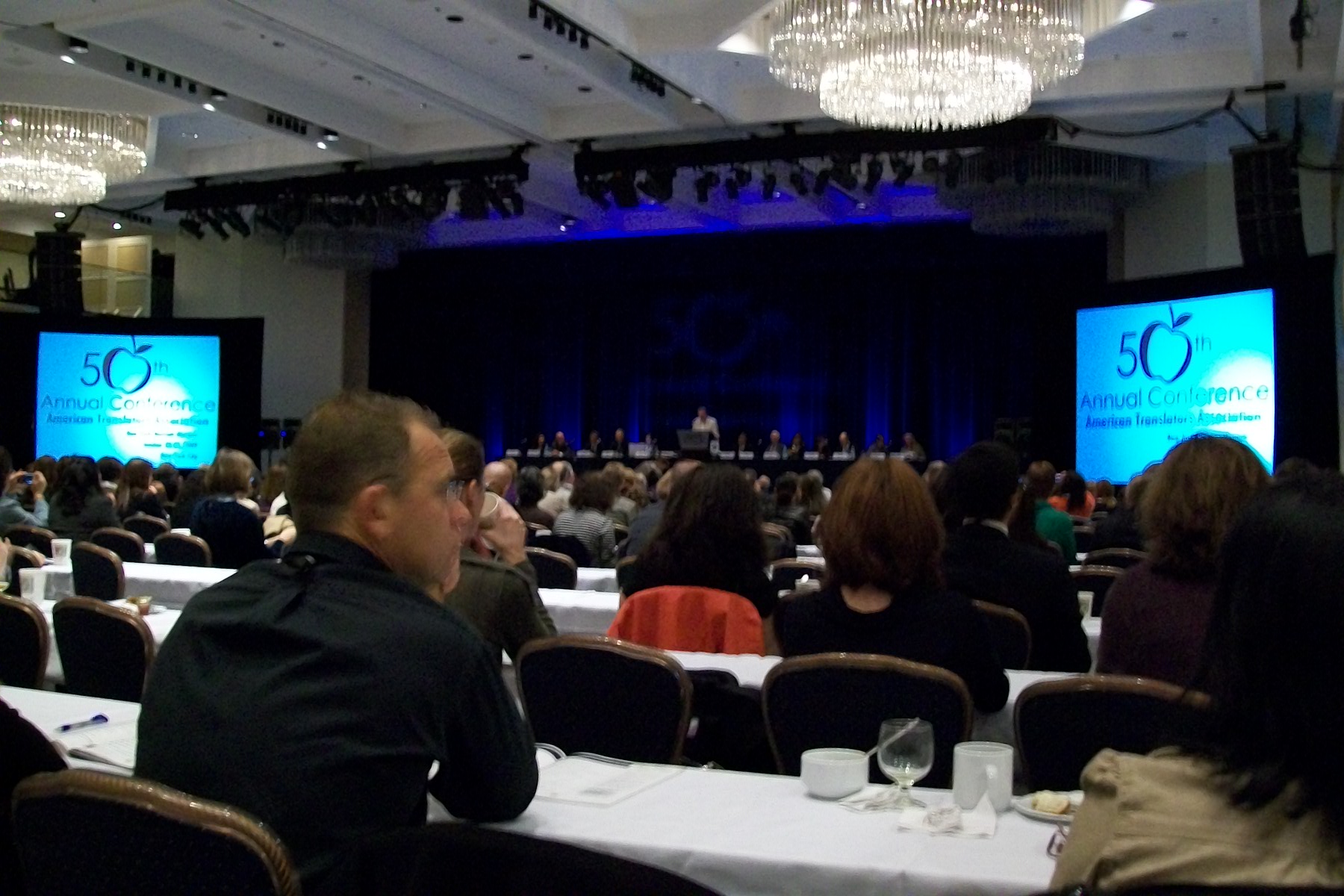
Opening Ceremony of the 50th ATA Conference
I have finally worked my way through all the mail, bills, errands, etc. that piled up while I was traveling to Myrtle Beach and NYC. It didn’t help that I immediately got slammed with work (not that I am complaining about that!!!) when I got back from the conference. I’ve had some time to mull things over, and I would like to share my impressions of the conference with you all.

The view of Times Square from my hotel room
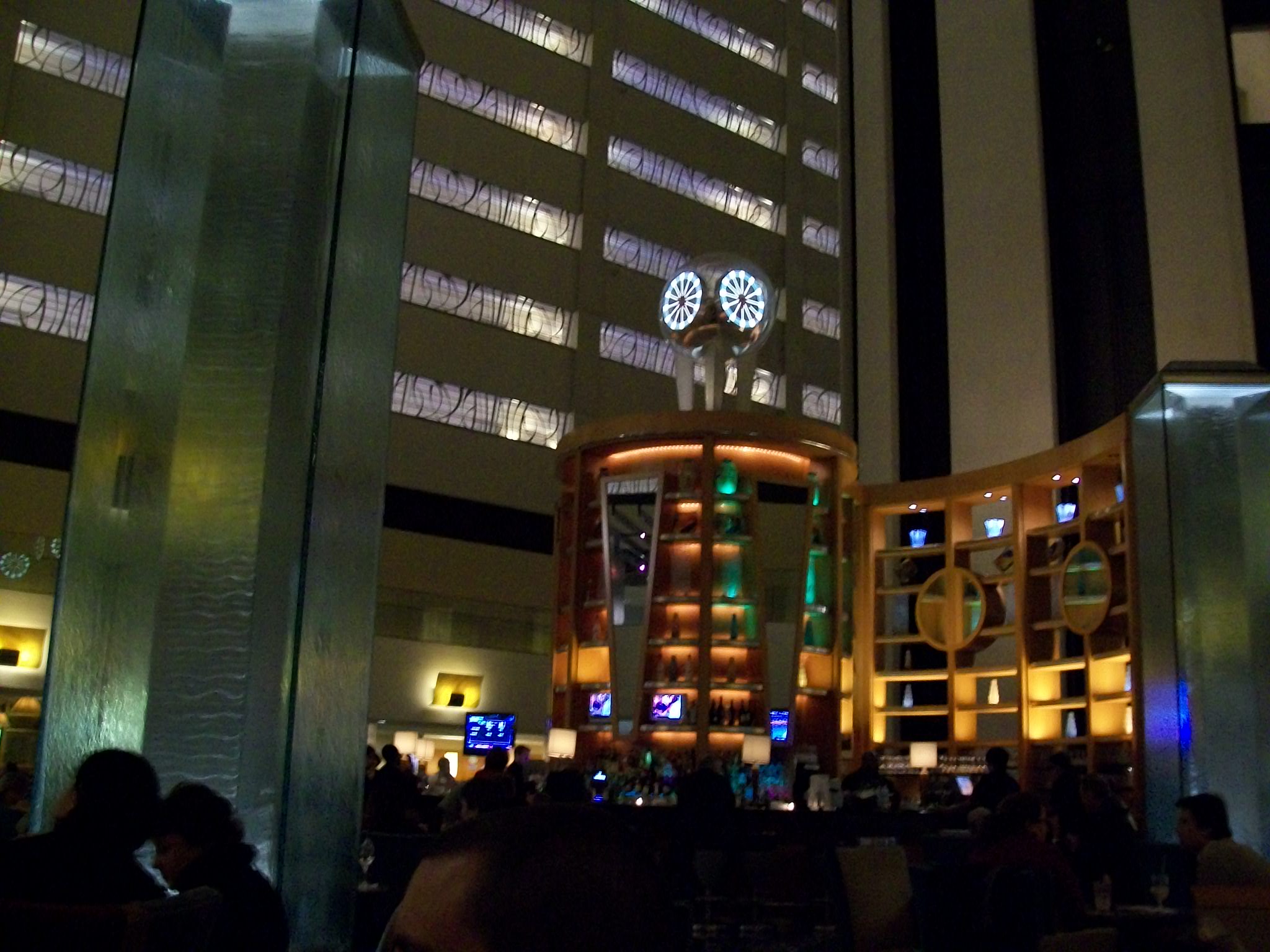
The hotel bar
As I’m sure you have read everywhere else, this year’s conference had a record 2,300+ attendees. The hotel was located in the heart of Times Square, which was exciting, but also really expensive. In past years my fellow translators and I would hang around the hotel bar and network after hours, but with a beer costing $12 and a mixed drink at $16 there wasn’t a whole lot of hanging around being done. Also, the hotel didn’t have a lot of seating that encouraged you to hang around and catch up with friends and make new ones. The conference was spread out over four floors, so unless you already made plans and specified where to meet it was rather difficult to find people. There were quite a few attendees who I wanted to see but never did. Plus, I specified my cell phone number as my on site contact information, which never made it into the attendees list due to the sheer number of attendees that needed to be listed. I got home from the conference and had two calls on my answering machine from people looking for me at the conference.
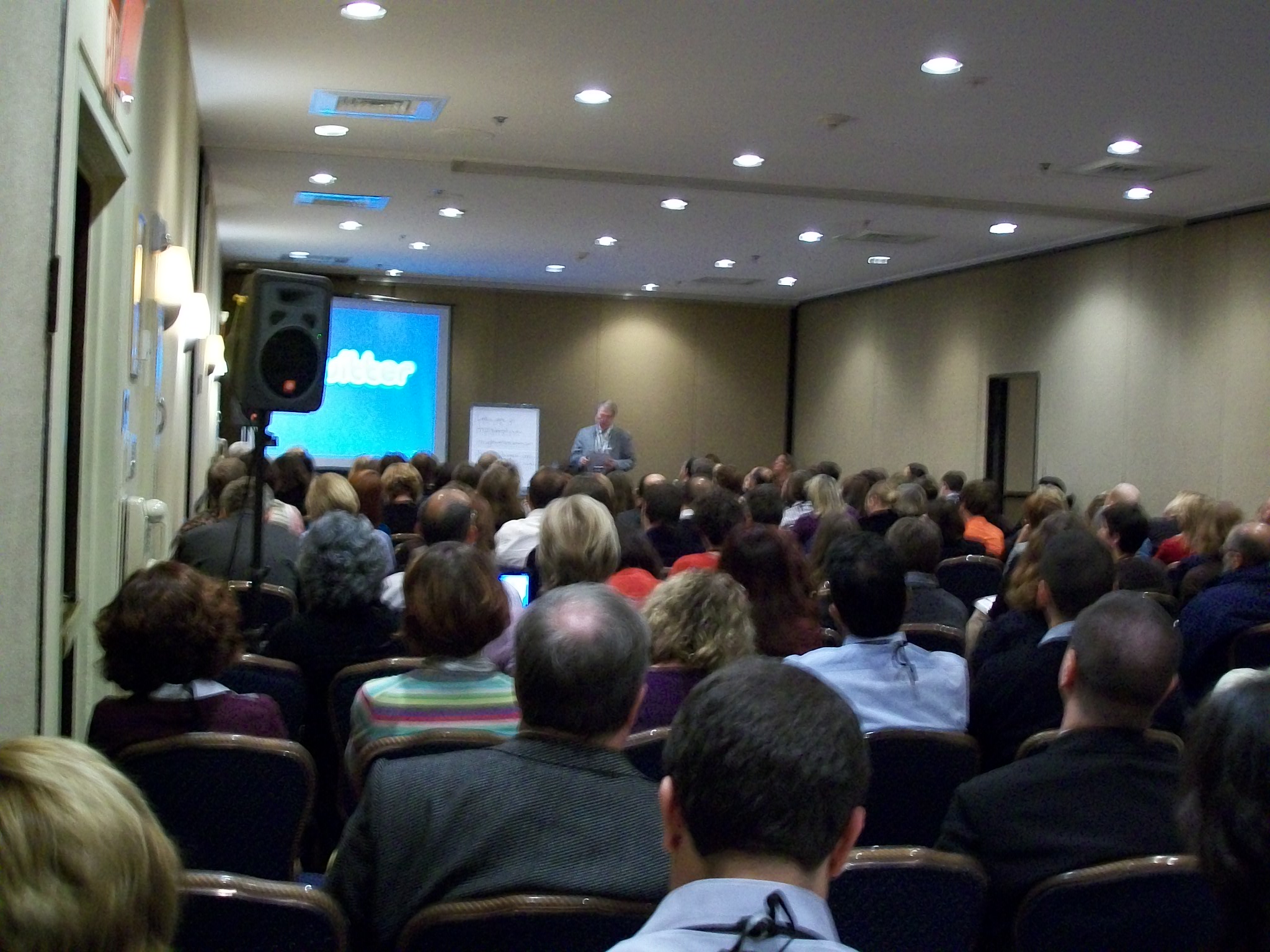
Michael Wahlster presents the ins and outs of Twitter to a packed room
The presentations were without a doubt top-notch this year. With all the proposals submitted only 1 out of 4 proposals were accepted, so the presenters really were the cream of the crop. I did not venture much out of the hotel this year and only attended one clunker, which was held by an invited speaker who was clearly out of her depth. The highlights for me were Karen Leube’s presentation on German-English medical translation and Chris Durban and Lillian Clementi’s Up the Down Economy! Growing Your Practice with ATA’s Client Outreach Kit. Karen’s presentation opened my eyes to several translation methods I have immediately started implementing, and I had heard good things about Chris Durban’s presentations for years. I hope to use some of their ideas to branch into marketing to some direct clients this year.
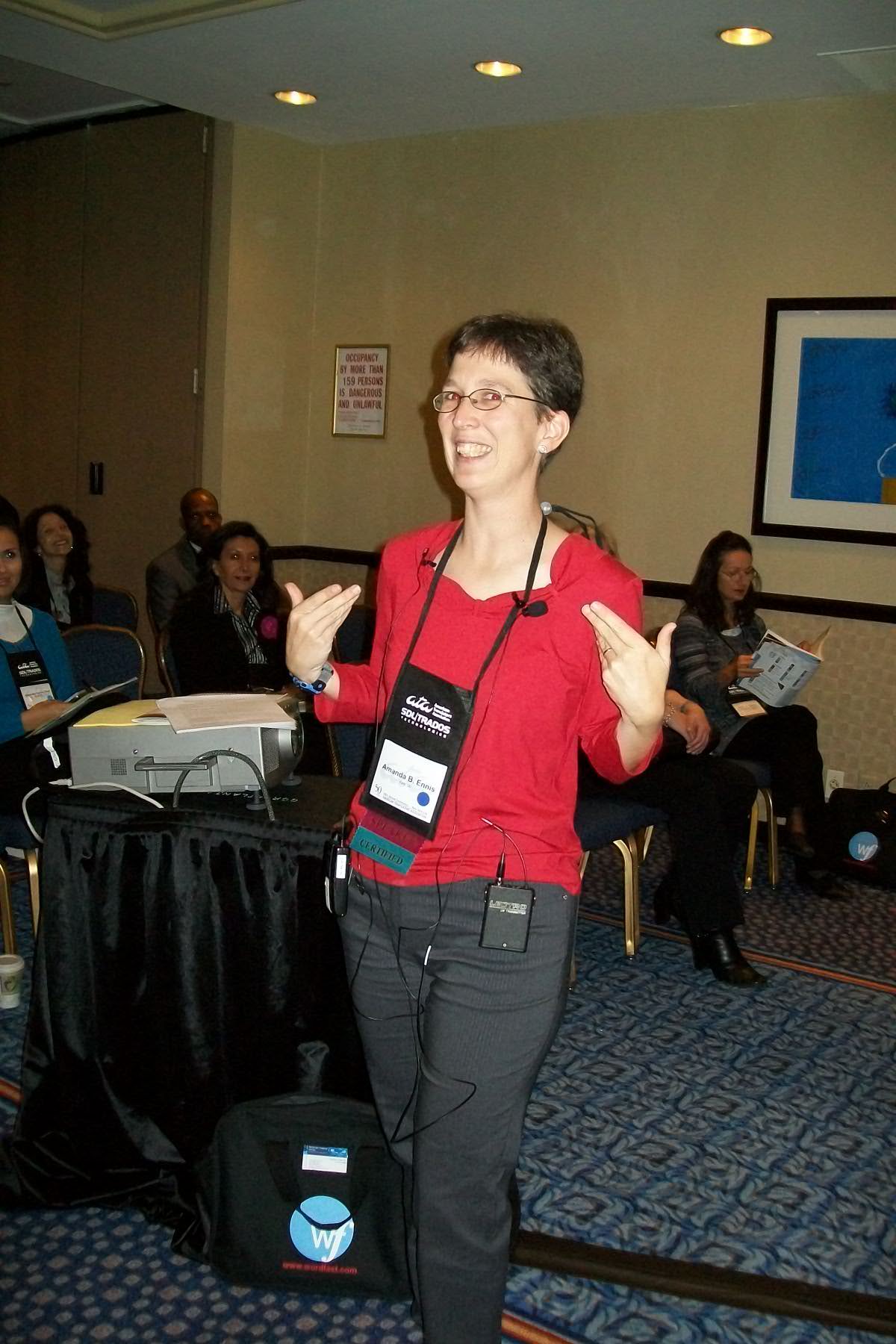
Amanda showing off her double microphones and conference badge
My presentations were very well-received. As usual, they were held at the same time as presentations I really wanted to attend, like Renato Beninatto’s and Nina Sattler-Hovdar’s presentations. Maybe next year. Amanda Ennis and I presented the first session for new attendees for something like the fifth year in a row. We’ve got our schtick down and still hopefully manage to make it quite fresh and entertaining. We’re the Abbott and Costello of translation :-). We have props and everything. This year they filmed us, which was a little intimidating.
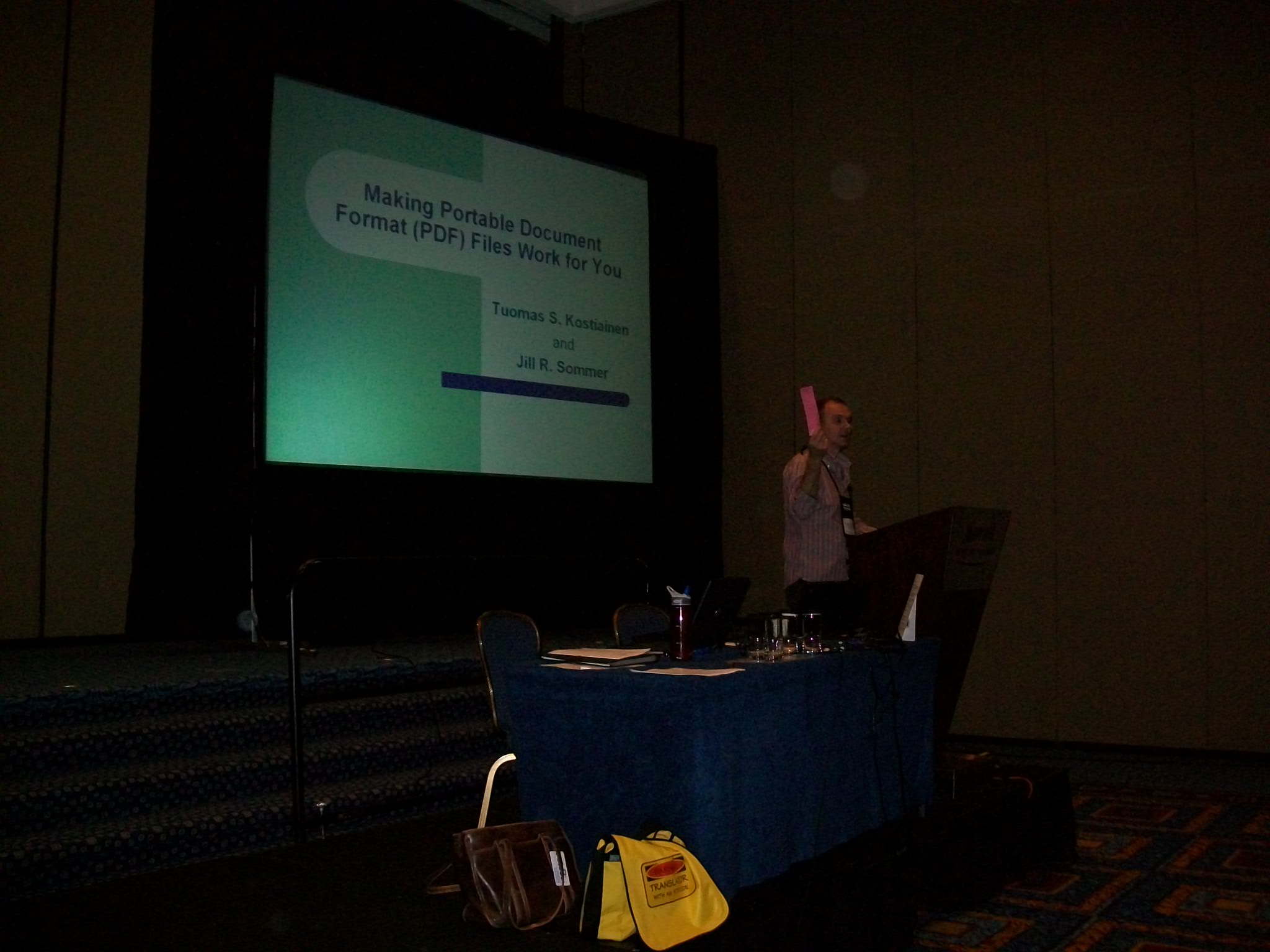
Tuomas at the start of our presentation
I was most excited about my second presentation of the conference, Making Portable Document Format Files Work For You, with Tuomas Kostiainen. Tuomas showed the attendees the ins and outs of Adobe Acrobat, such as editing PDFs, filling out PDF forms, and creating electronic signatures, and creating translation memories from PDFs using LogiTerm AlignFactory. I filled the second half of the presentation showing everyone how to create PDFs in Word and Excel and how to use optical character recognition tools to create MS Word files for translation in translation environment tools. I also briefly touched on formatting in Word. We received lots of enthusiastic feedback, which is always appreciated.
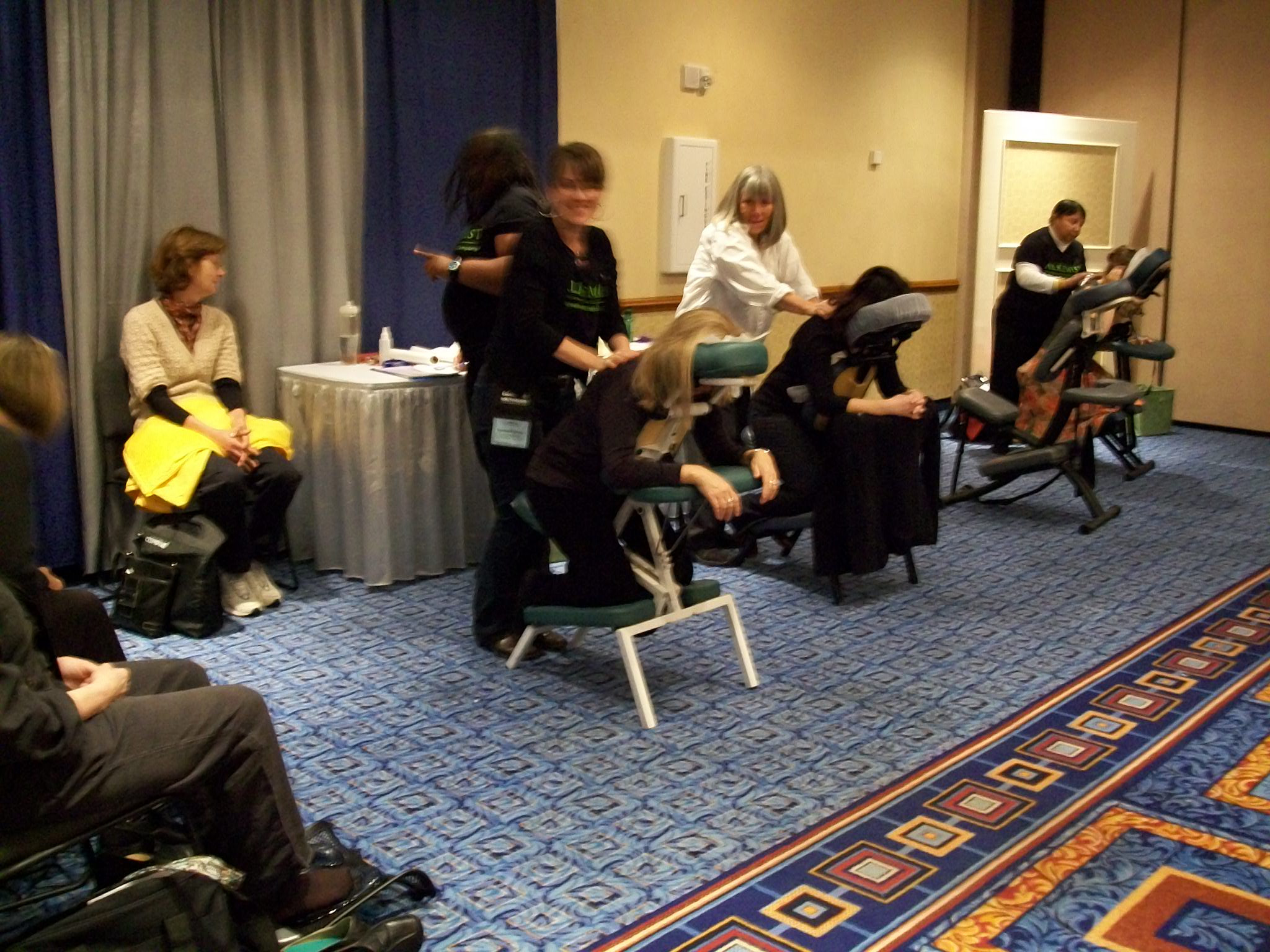
Chair massages complements of Bodyworks and ATA
The highlight of the conferences for me are the free chair massages that are available to attendees in the back of the Exhibit Hall. There is usually a bit of a wait, but I find if you wait until during sessions the wait isn’t as long. While you are waiting you can sit and massage your feet on an electronic foot massager. The massage therapists are always top-notch, and I enjoy slipping them a little tip as a thank you for giving me a little relaxation in the midst of all the craziness.
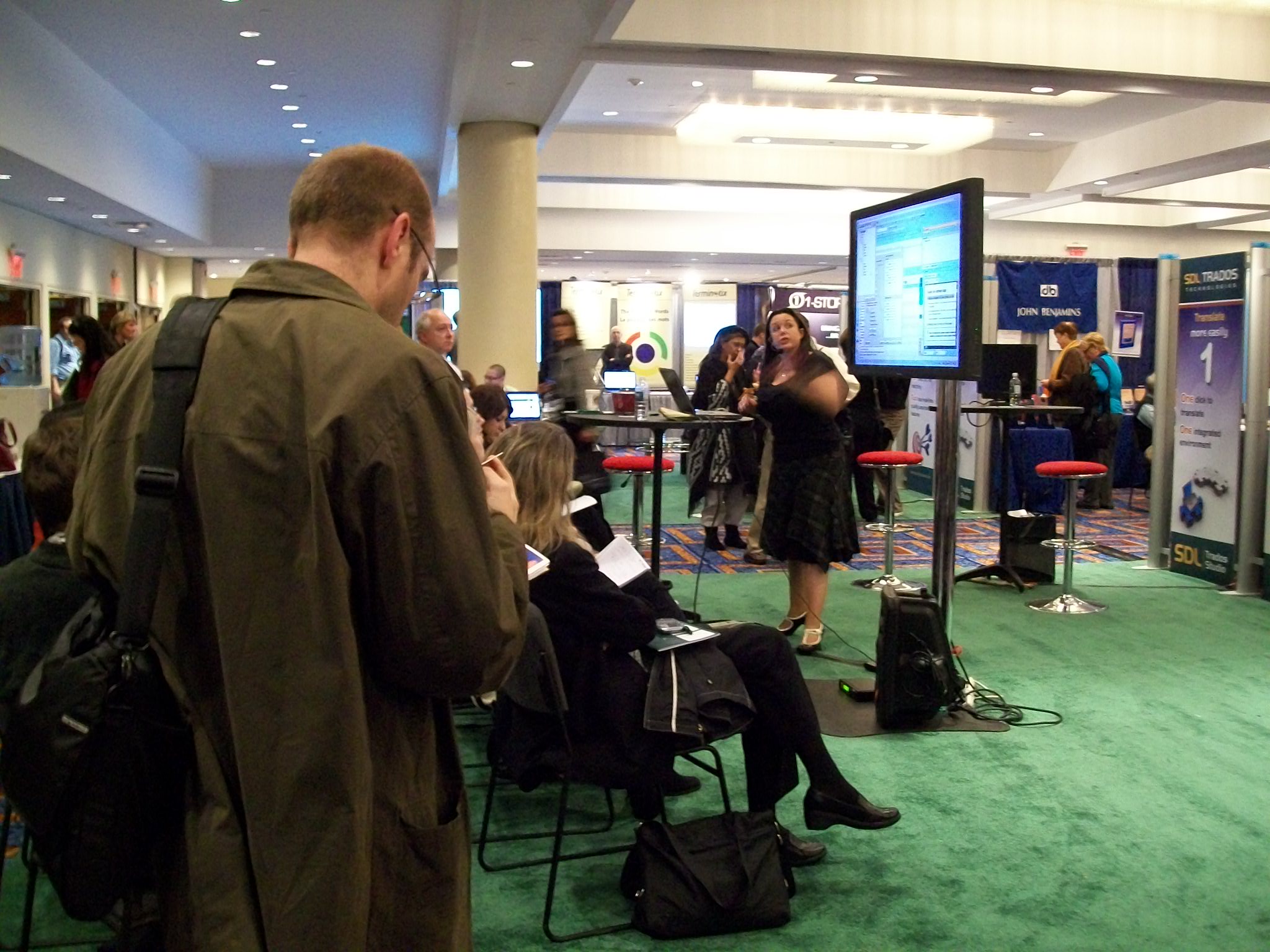
Presentation at the SDL Trados booth
The Exhibit Hall is also a central draw of the conference. Vendors such as tool vendors, universities, dictionary companies and translation agencies staff their booths to show us the latest and greatest in translation and interpreting. I usually buy a dictionary at the conference every year, but I never managed to get to the Intrans Books stand this year. I did stop at a couple translation agency booths to say hi to project managers with whom I have worked in the past and to reconnect with agencies who I have lost touch with when my project manager(s) left the company. I also walked through the Job Exchange at least once a day to make sure my resumes and business cards were replenished and prominently visible.
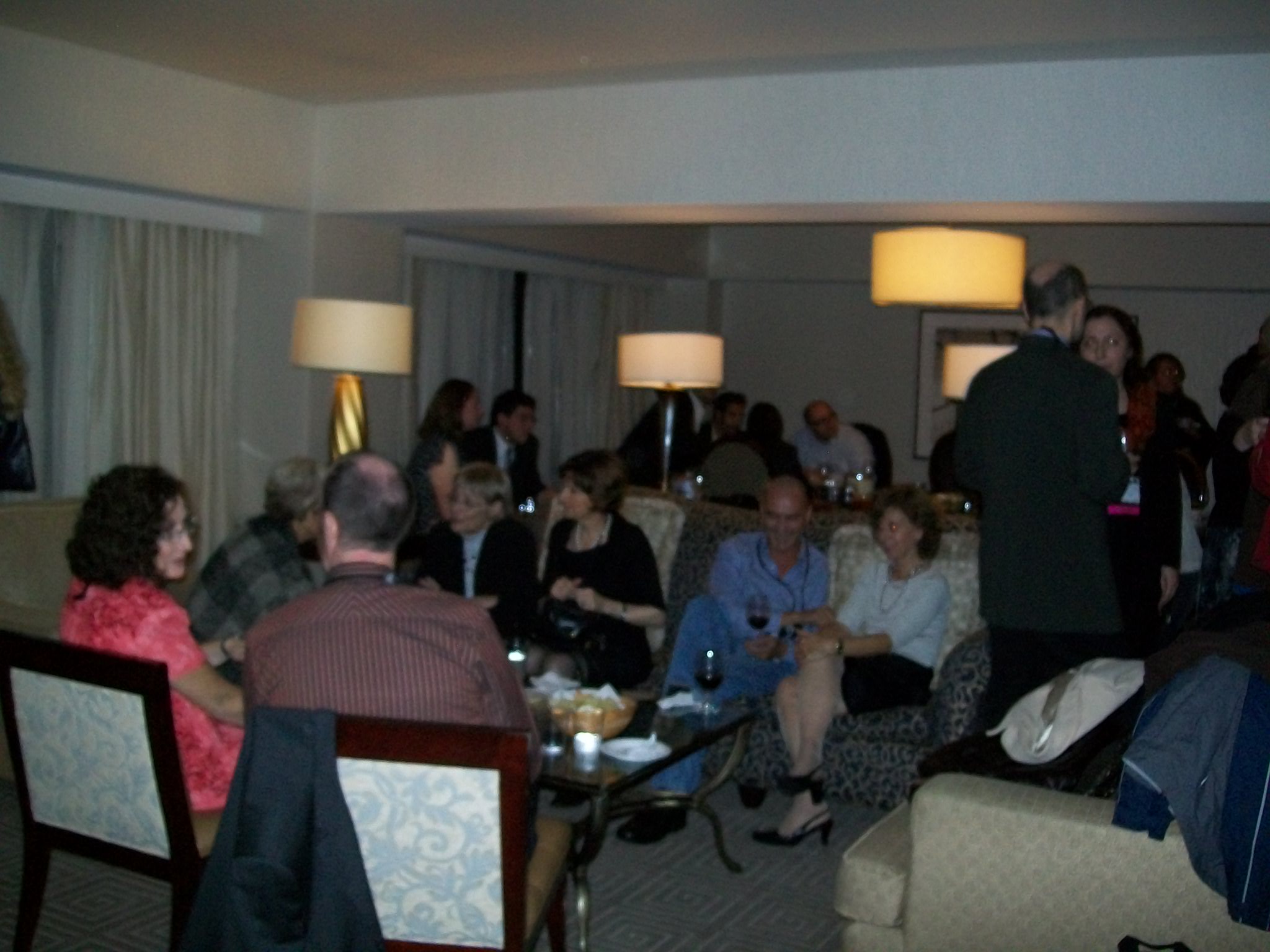
CETRA Reception
Last but not least, the networking. In addition to the blogger lunch I organized on Day 1 and the Kent State lunch on Day 2, I was invited to several private receptions for various translation agencies with whom I work. I enjoyed finally meeting one of my favorite project managers after talking with her on the phone for several years now. Plus, it is a nice opportunity to sit down and really talk with colleagues in a smaller, quieter setting.
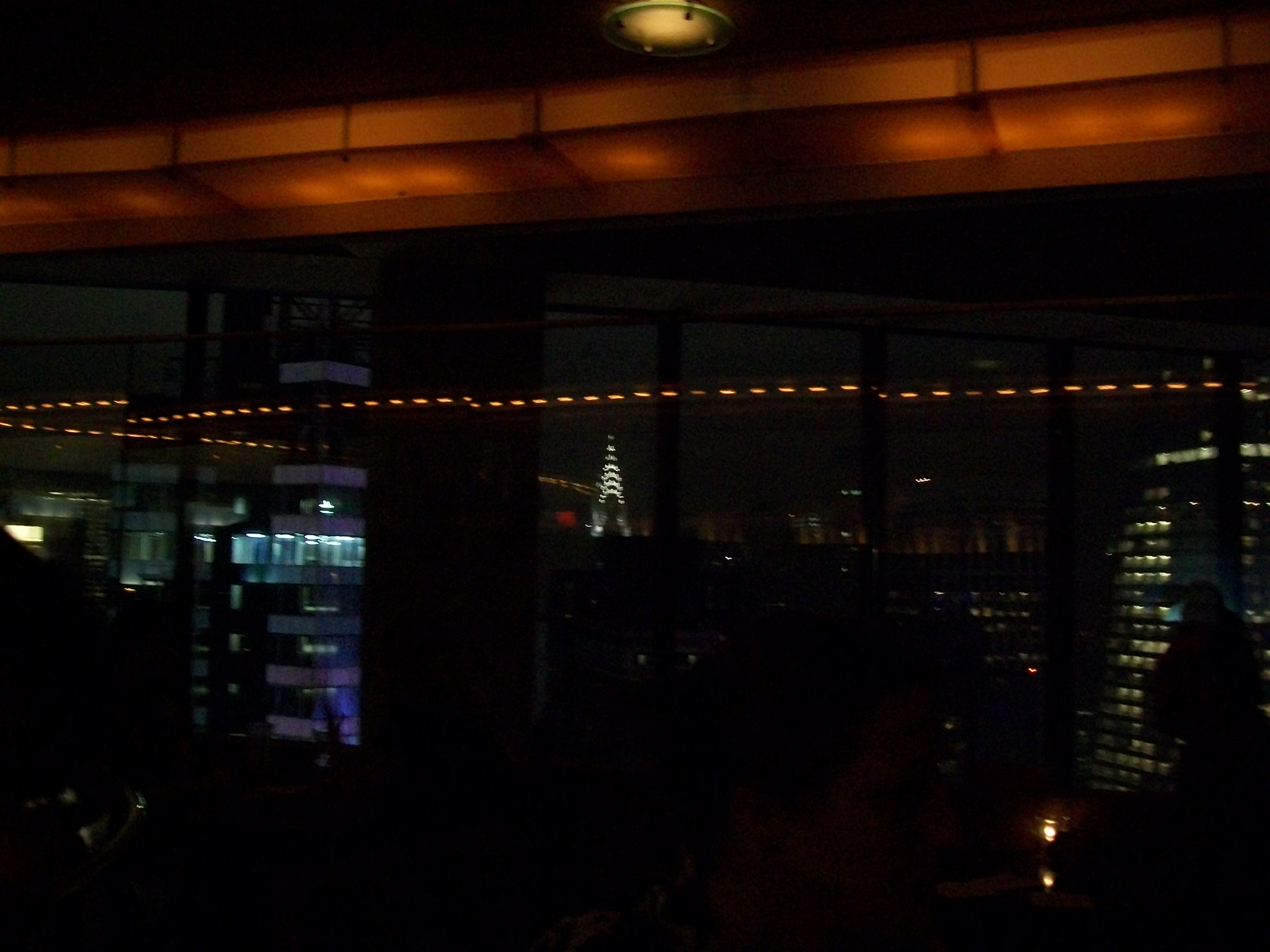
View of the Chrysler Building from The View
I had planned to leave on Saturday afternoon, but decided to stay an extra night when a friend offered me her free bed for the night. Since I had driven to Baltimore and took the bus to NYC it wasn’t a problem to stay. I went out for a wonderful dinner at The View, which was the revolving restaurant on the top floor of the hotel. We sat in the lounge, enjoyed the buffet and even got to watch the fireworks from the World Series over the skyscrapers. Afterward we headed down to the conference dance and danced a bit before calling it a night. It was a great way to end the conference.
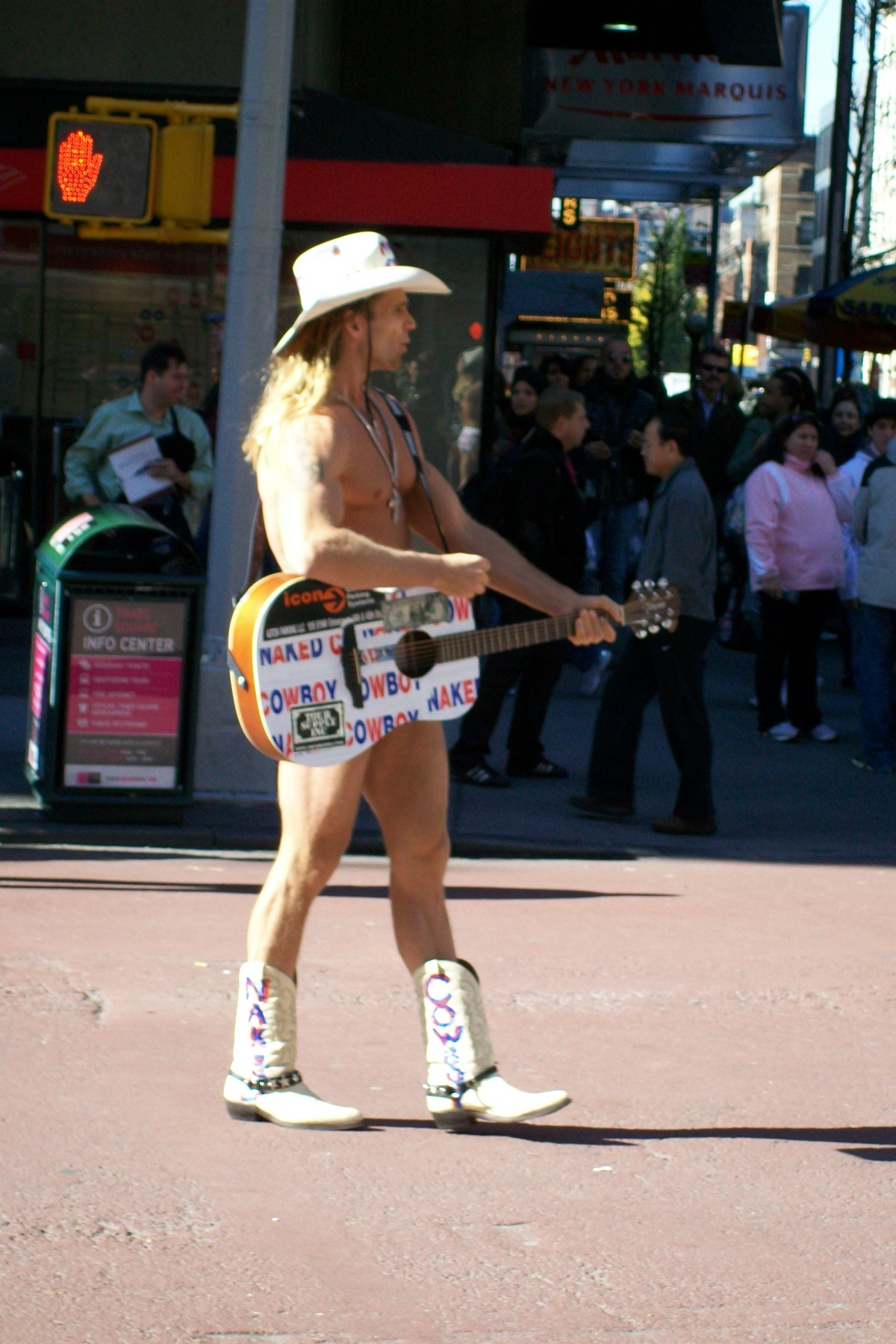
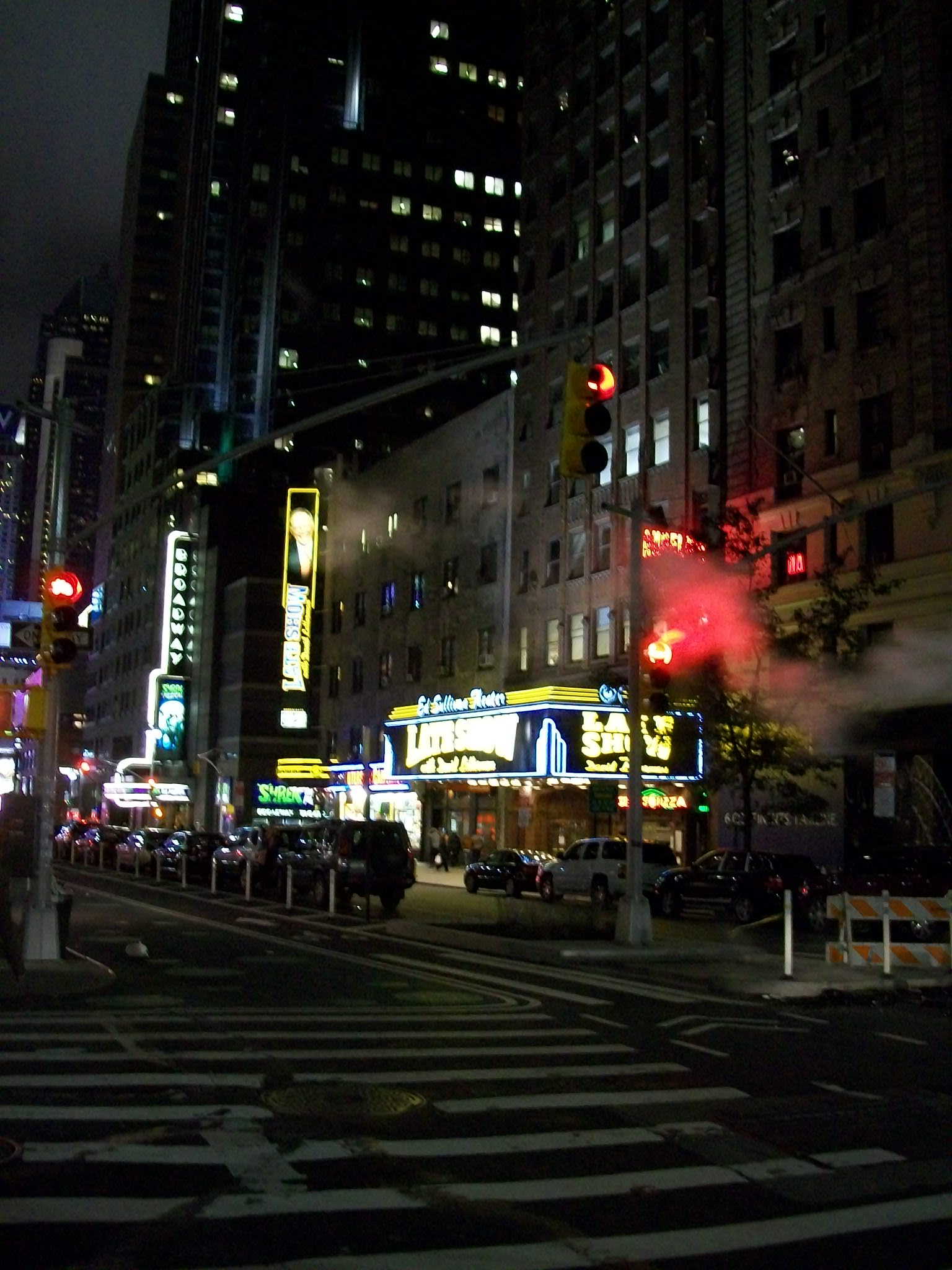 All in all I am very glad I went to this year’s conference. The presentations were interesting, and despite a couple minor complaints the venue was fabulous. I wasn’t feeling well, and some people noticed it enough to call me after the conference because they were concerned. I ended up being really sick the whole next week and am still not 100%. However, I still managed to meet what promises to be two new agencies, reconnected with some agencies and colleagues, met some really great new people, and got to hang out with my friends. And I got to see the Naked Cowboy 🙂
Since when is it expected that translators work on weekends? November 16, 2009
Posted by Jill (@bonnjill) in Business practices.11 comments
I received the following e-mail on Saturday morning, which I promptly deleted without replying:
Subject: Proofreading
Hello,
I’m looking for a translator to proofread a German to English translation today using Star Transit. If you’re available please let me know what you rate is per word/ per hour?
More information available on request.
I was really tempted to reply with an hourly rate of $100 since it was weekend and rush, but I decided it wasn’t even worth getting upset about. However, it did inspired this blog post, so I’d like to thank the agency publicly for sending me an e-mail at 4:56 a.m. through the ProZ.com directory (Are you really surprised that this came through ProZ? I wasn’t…). I’m just glad I receive my e-mail on a computer in my office and not on my cell phone next to the bed.
The beauty of being a freelancer is that we can choose when we work, but I really resent the assumption of some agencies that we are available 24/7. Sending an e-mail on a Saturday morning or calling on a Sunday really exceed the boundaries of common decency. If I am translating 2,000-3,000 words a day during the week I need some down time on the weekends – or if I choose to work through the weekend I make sure to take a day or two off during the week. A while ago I had gotten so busy that I realized that I had worked for three weeks straight without a day off. At that point I decided that I would no longer work on the weekends, so I really notice the fact that some agencies seem to assume we will work at any and all hours of the day.
I think the problem lies in the fact that many translators are only available on the weekends, because they hold full-time jobs. There aren’t enough full-time freelancers to change public perception. Hopefully that will change as the industry grows and changes. In the meantime, stand your ground to unreasonable requests (5,000 words a day, 3 hour turnarounds, weekend work) and make sure you don’t burn yourself out!
Update: Riccardo at About Translation posted a similar post today (great minds think alike I guess), but his focus was on the phrasing of a quote request to ensure you receive a meaningful reply. The agency should have read this post before sending out the request. I may have been more likely to respond.
Der HDL-Song November 15, 2009
Posted by Jill (@bonnjill) in Fun stuff.1 comment so far
Everyone complains about the decay of written language through the Internet and chatting. This appears to be especially prevalent in German, where they are already fighting the encroachment of English on the German language, which people call “Denglisch.” Apparently English chat vernacular has also sneaked its way into the German subconscious. This talented young man offers a humorous take on the situation. Just a word of warning: the song is in German and there are no English subtitles (instead there are German), so only German speakers will be able to enjoy it. Sorry about that folks! But I definitely wanted to share this with you.
youtube=”http://www.youtube.com/watch?v=Sw5gxZ3njx4&NR=1″
TGIF: Once Upon A Time November 13, 2009
Posted by Jill (@bonnjill) in Fun stuff, TGIF.add a comment
It’s Friday the 13th! To counteract the supposed bad joo-joo I thought I would share this video clip of an adorable little French girl named Capucine. This is just about the cutest thing I have seen in a while. Have a great weekend, everyone!


